
Occupied with technology
SHYNESS AND TECHNOLOGY
Are the web and the cellphone making our social abilities decay? I frequently hear this from parents or guardians of modest young people, who are stressed that their kids are investing more energy with their gadgets than with their friends.
Not every person utilizing social networks is amiable to radical straightforwardness, obviously. Some like to hole up behind online personas, pseudonyms and symbols. Furthermore, this anonymity can likewise motivate something contrary to timidity – an intensity that transforms into antagonistic vibe and misuse.
This uneasiness isn't new. At the main global gathering on timidity, sorted out in Wales in 1997 by the British Psychological Society, Stanford psychology professor Philip Zimbardo was the keynote speaker. He noticed that since he started the Stanford Shyness Survey during the 1970s, the quantity of individuals who said they were timid had ascended from 40 percent to 60 percent. He accused this for new innovation like email, cellphones and even ATMs, which had relaxed the "social glue" of casual contact. He dreaded the appearance of "another ice age" of non communication, when we would effortlessly have the option to go a whole day without conversing with someone else.
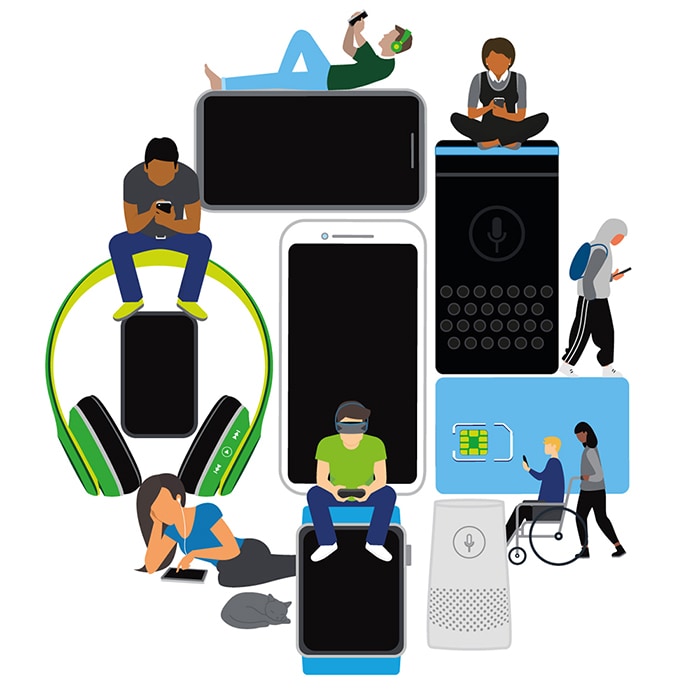
Different kind of social
The timid aren't really antisocial; they are simply diversely social. They figure out how to direct their amiability and convey in aberrant or extraneous manners. Cellphones permit them to make associations without a portion of the timidity of up close and personal communications.At the point when the Finnish organization Nokia acquainted messaging with its telephones in the mid-1990s, it seemed to be a primitive technology – a tedious, vitality wasteful substitute for talking. However, messaging took off among Finnish young men since it was an approach to converse with young ladies without the signs being mixed by blushing or tied tongues.

As for the looming “social ice age” created by technology, Zimbardo made that claim before the rise of social networks and the smartphone. These have made it easy for people to lay bare intimate details of their private lives online, in ways that seem the very opposite of shyness. Advocates of this kind of online self-disclosure call it “radical transparency.”
Not everyone using social networks is amenable to radical transparency, of course. Some prefer to hide behind online personas, pseudonyms and avatars. And this anonymity can also inspire the opposite of shyness – a boldness that turns into hostility and abuse.
Comments
Post a Comment